


How can metal composite materials significantly reduce raw material costs while meeting the demands of extreme operating conditions?
Release Time : 2026-01-19
In modern high-end manufacturing, engineers often face a dilemma: on the one hand, equipment needs to operate reliably for extended periods in extreme environments such as high temperature, high pressure, strong corrosion, or high wear, requiring materials with superior performance; on the other hand, high-performance metals such as titanium, zirconium, and nickel-based alloys are expensive, and using them entirely would lead to high manufacturing costs, making large-scale application difficult. It is precisely in this contradiction that metal composite materials have emerged—using a clever "functional zoning" concept, they use high-performance metals in critical parts while employing economical base materials in the main structural body, thereby achieving significant cost optimization without sacrificing core performance.
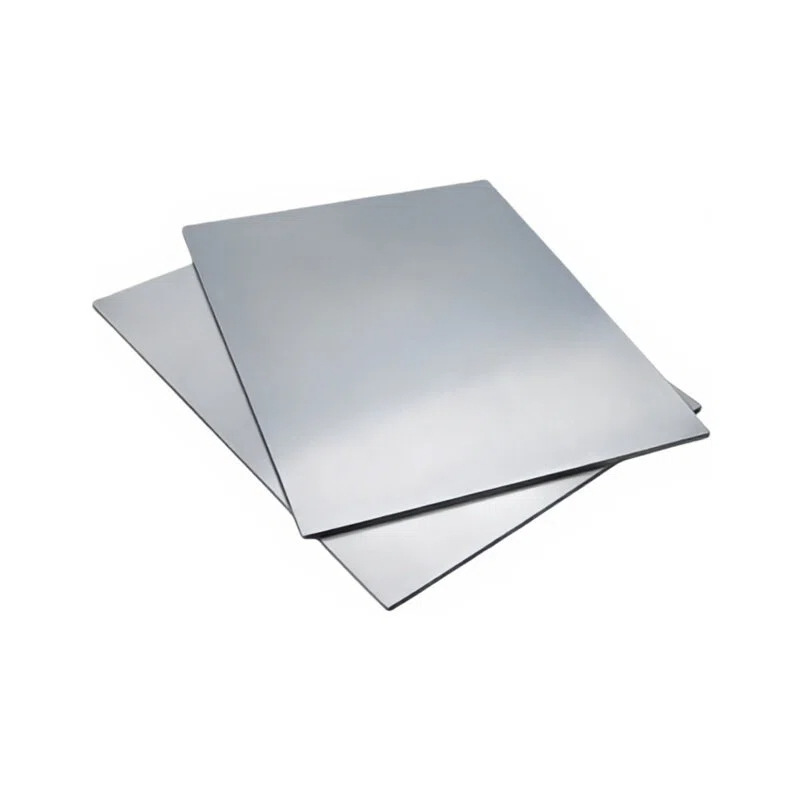
Metal composite materials are typically composed of two or three layers of different metals firmly bonded together through metallurgical bonding processes (such as hot rolling composite, explosive welding, or diffusion bonding). Their design logic is extremely clear: the cladding layer is responsible for "resisting external forces," while the base layer is responsible for "supporting the whole." For example, in the inner walls of chemical reactors, the parts in direct contact with strong acids, strong alkalis, or chloride ion media utilize thin layers of titanium or zirconium, whose inherent passivation film provides excellent corrosion resistance. The bulk of the substrate, however, is made of carbon steel or low-alloy steel, providing the necessary strength, rigidity, and pressure resistance. Thus, using only 5% to 10% precious metals, 100% corrosion-resistant surface coverage is achieved, reducing material costs several times over while extending service life far beyond ordinary coatings or linings.
This strategy of "precise material selection" is not only evident in corrosion resistance but also widely applied in other extreme scenarios. In marine engineering, stainless steel-carbon steel composite plates are used for hulls or seawater pipelines, resisting seawater corrosion while maintaining structural economy. In aerospace, titanium-aluminum composite components retain the stability of titanium in high-temperature areas while leveraging the lightweight advantages of aluminum in non-critical areas, achieving a balance between weight reduction and performance. In energy equipment, nickel-based alloy cladding resists high-temperature oxidation and sulfide corrosion, while the steel substrate ensures overall mechanical integrity.
Even more noteworthy is the fact that the interfacial strength of metallurgical bonding far exceeds that of mechanical bonding or spray coating. During hot rolling or explosive bonding, interfacial atoms diffuse and even form micro-metallurgical bonds, truly "fusing" the different metals together. This allows the composite material to be subsequently cut, bent, welded, and even stamped without delamination, bulging, or peeling—a reliability that traditional cladding or welding cannot achieve. Therefore, it is not only a material alternative but also a system-level engineering optimization.
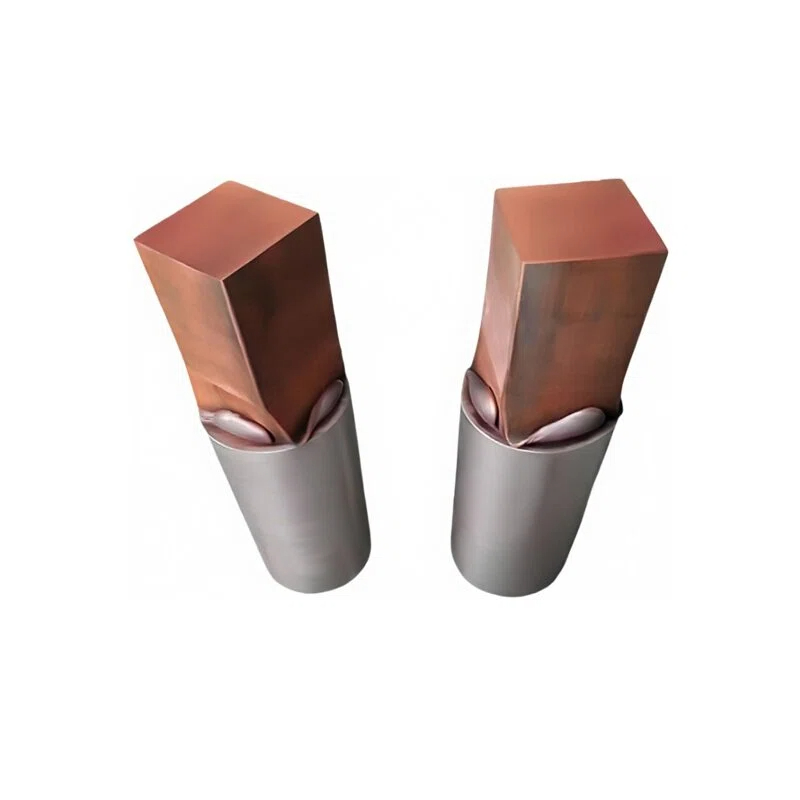
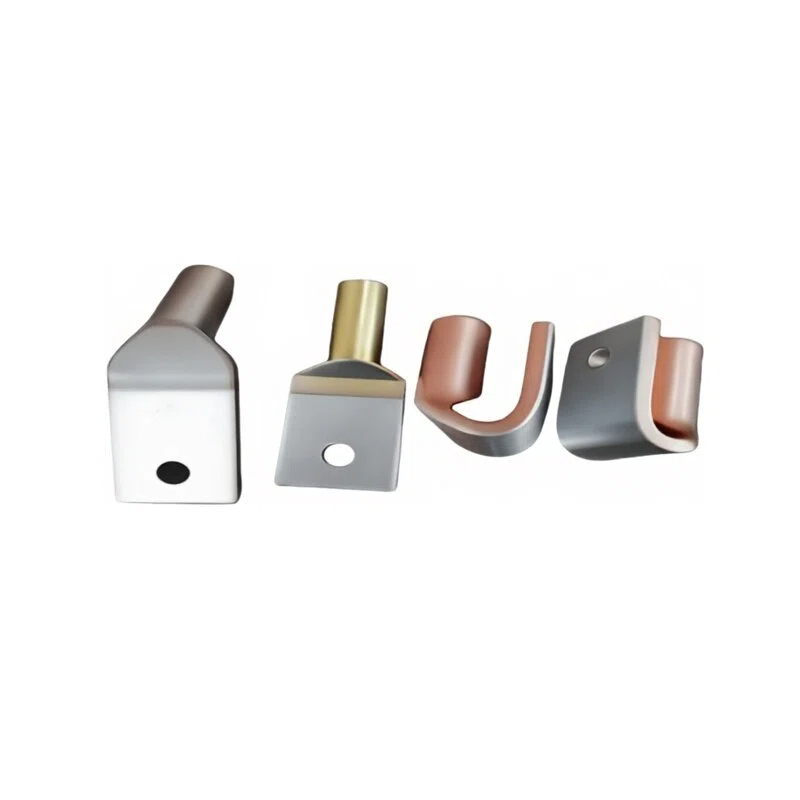
Furthermore, composite materials avoid the brittle intermetallic compound problems associated with direct welding of dissimilar metals. When connecting titanium and steel, a titanium-steel composite transition joint can be prepared first, and then welded to the corresponding base materials, fundamentally solving the cracking risk. This "composite decoupling" approach greatly expands the possibilities of material combinations.
Of course, realizing this advantage requires a precise understanding of the service environment and a scientifically designed material matching system. Not all operating conditions are suitable for composite structures; interfacial stability, differences in thermal expansion, and the risk of galvanic corrosion all require careful evaluation. But precisely because of this, the value of metal composite materials lies not only in "saving money," but also in "using them smartly"—it ensures that expensive, high-performance metals are only used where they are most needed, like a shrewd commander deploying elite troops on key fronts, rather than spreading them out across the board.
Ultimately, metal composite materials represent a rational and efficient materials philosophy: not blindly pursuing the ultimate in a single performance metric, but finding the optimal solution between performance, lifespan, and cost through structural innovation. When a titanium-steel composite plate stands quietly in a chemical plant's reaction tower, it bears not only pressure and corrosion, but also the engineers' deep consideration of resources, safety, and sustainable development—because true advanced manufacturing is never about "spending any amount of money," but about "doing it right."
Metal composite materials are typically composed of two or three layers of different metals firmly bonded together through metallurgical bonding processes (such as hot rolling composite, explosive welding, or diffusion bonding). Their design logic is extremely clear: the cladding layer is responsible for "resisting external forces," while the base layer is responsible for "supporting the whole." For example, in the inner walls of chemical reactors, the parts in direct contact with strong acids, strong alkalis, or chloride ion media utilize thin layers of titanium or zirconium, whose inherent passivation film provides excellent corrosion resistance. The bulk of the substrate, however, is made of carbon steel or low-alloy steel, providing the necessary strength, rigidity, and pressure resistance. Thus, using only 5% to 10% precious metals, 100% corrosion-resistant surface coverage is achieved, reducing material costs several times over while extending service life far beyond ordinary coatings or linings.
This strategy of "precise material selection" is not only evident in corrosion resistance but also widely applied in other extreme scenarios. In marine engineering, stainless steel-carbon steel composite plates are used for hulls or seawater pipelines, resisting seawater corrosion while maintaining structural economy. In aerospace, titanium-aluminum composite components retain the stability of titanium in high-temperature areas while leveraging the lightweight advantages of aluminum in non-critical areas, achieving a balance between weight reduction and performance. In energy equipment, nickel-based alloy cladding resists high-temperature oxidation and sulfide corrosion, while the steel substrate ensures overall mechanical integrity.
Even more noteworthy is the fact that the interfacial strength of metallurgical bonding far exceeds that of mechanical bonding or spray coating. During hot rolling or explosive bonding, interfacial atoms diffuse and even form micro-metallurgical bonds, truly "fusing" the different metals together. This allows the composite material to be subsequently cut, bent, welded, and even stamped without delamination, bulging, or peeling—a reliability that traditional cladding or welding cannot achieve. Therefore, it is not only a material alternative but also a system-level engineering optimization.
Furthermore, composite materials avoid the brittle intermetallic compound problems associated with direct welding of dissimilar metals. When connecting titanium and steel, a titanium-steel composite transition joint can be prepared first, and then welded to the corresponding base materials, fundamentally solving the cracking risk. This "composite decoupling" approach greatly expands the possibilities of material combinations.
Of course, realizing this advantage requires a precise understanding of the service environment and a scientifically designed material matching system. Not all operating conditions are suitable for composite structures; interfacial stability, differences in thermal expansion, and the risk of galvanic corrosion all require careful evaluation. But precisely because of this, the value of metal composite materials lies not only in "saving money," but also in "using them smartly"—it ensures that expensive, high-performance metals are only used where they are most needed, like a shrewd commander deploying elite troops on key fronts, rather than spreading them out across the board.
Ultimately, metal composite materials represent a rational and efficient materials philosophy: not blindly pursuing the ultimate in a single performance metric, but finding the optimal solution between performance, lifespan, and cost through structural innovation. When a titanium-steel composite plate stands quietly in a chemical plant's reaction tower, it bears not only pressure and corrosion, but also the engineers' deep consideration of resources, safety, and sustainable development—because true advanced manufacturing is never about "spending any amount of money," but about "doing it right."