


How to improve the interfacial strength when non-ferrous metal plates are combined with other metals?
Release Time : 2026-01-27
Non-ferrous metal plates, due to their high melting point, high strength, and excellent high-temperature resistance, have wide applications in aerospace, electronic packaging, and the nuclear industry. However, when plates are composited with other metals, the significant differences in their physicochemical properties often make interfacial bonding strength a key factor limiting the performance of the composite material. To improve the interfacial bonding strength when plates are composited with other metals, a comprehensive approach is needed, encompassing interface design, material selection, and process optimization.
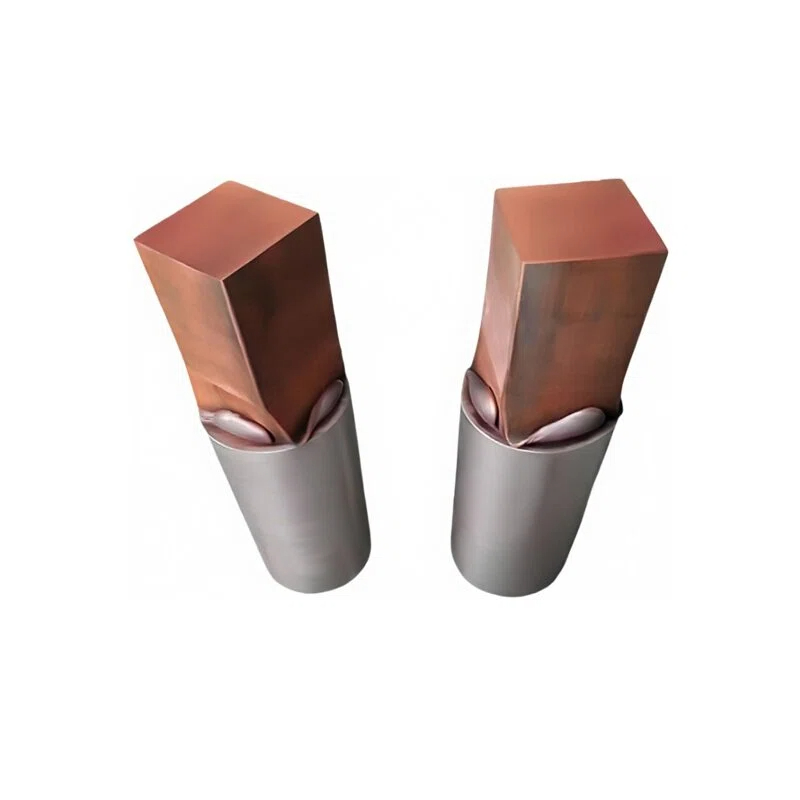
Interfacial design is the core element in improving the bonding strength of plate-based composites. When plates are composited with metals such as copper and nickel, direct mixing can easily lead to interfacial defects because both are immiscible in both solid and liquid states. Therefore, interfacial compatibility can be improved by introducing a transition layer or a third component. For example, introducing elements such as iron or nickel into the plate-copper interface can form a diffusion-type interface during sintering, promoting element interdiffusion and enhancing wettability. This "compositional bridging" mechanism allows the originally immiscible plates and copper to achieve metallurgical bonding through a solid solution mesophase, significantly improving the interfacial bonding strength.
Material selection has a decisive influence on interfacial performance. In plate-based composites, alloying the matrix metal is an effective way to improve interfacial strength. Elements such as cobalt, nickel, and palladium can improve the wettability between plates and copper and promote interfacial element diffusion, but the amount added must be controlled to avoid the formation of brittle phases. For example, QA110-4-4 copper alloy, containing appropriate amounts of iron and nickel, can form a solid solution interface with plates while maintaining high strength, making it an ideal matrix for plate-based composites. Furthermore, surface modification of plate fibers or particles is also crucial. Coating the plate surface with a layer of good compatibility with the matrix metal through methods such as chemical plating and physical vapor deposition can effectively block interfacial reactions and improve bonding strength.
The preparation process is a key means to optimize the interfacial structure. Powder metallurgy achieves uniform mixing of plate powder and reinforcing phase through steps such as mechanical ball milling and spray drying, followed by pressing and sintering to form the composite material. Sintering temperature, time, and atmosphere need to be precisely controlled to promote interfacial element diffusion and avoid excessive reactions that could lead to interfacial embrittlement. Liquid-phase sintering utilizes the liquid phase formed by low-melting-point metals (such as copper and silver) at high temperatures to fill pores, promoting densification and improving interfacial bonding strength. Hot isostatic pressing (HIP) eliminates pores and refines grains through a high-temperature, high-pressure environment, further optimizing the interfacial structure.
Controlling interfacial reactions is a key technical challenge in improving bonding strength. Plates readily undergo interfacial reactions with metals such as copper and nickel at high temperatures, forming brittle compounds that reduce bonding strength. Optimizing process parameters, such as shortening the high-temperature holding time and lowering the sintering temperature, can suppress the degree of interfacial reaction. For example, in the preparation of plate-copper composites, controlling the holding time can prevent excessive erosion of the plate fibers, maintain fiber strength, and ensure the formation of a continuous solid solution phase at the interface, achieving a balance between strength and toughness.
Microstructure control is an important direction for improving interfacial performance. Processing high-aspect-ratio groove structures on the plate surface using ultrafast lasers can induce the formation of surface nanostructures, improving the wettability of liquid copper on the plate surface. The capillary force generated by the groove structure promotes the rapid spread of liquid copper, increasing the contact area, forming a mechanical interlock, and significantly improving the interfacial bonding strength. Furthermore, laser modification can also promote the diffusion of interfacial elements, enhancing metallurgical bonding and bringing the tensile fracture strength of the joint close to that of diffusion welding.
Interfacial performance evaluation is the basis for process optimization. Observing the interfacial microstructure and analyzing elemental distribution and phase composition using transmission electron microscopy (TEM) and scanning electron microscopy (SEM) allows for the assessment of interfacial bonding quality. Mechanical property tests such as tensile and shear tests directly reflect the interfacial bonding strength. Combining microscopic analysis and mechanical testing allows for the establishment of a correlation between interfacial structure and performance, guiding the optimization of process parameters.
In the future, with the development of micro/nano-scale design and multifunctional integration technologies, the interfacial bonding strength of plate-based composite materials will be further improved. By developing nanoscale reinforcing phases and optimizing the interfacial structure, higher-strength plate-based composite materials can be achieved to meet the application requirements in extreme environments. Simultaneously, the promotion of green preparation technologies will reduce energy consumption and pollution, promoting the sustainable development of plate-based composite materials.