


When non-ferrous metal plates are combined with other metals, how can the interfacial bonding performance be optimized?
Release Time : 2026-03-16
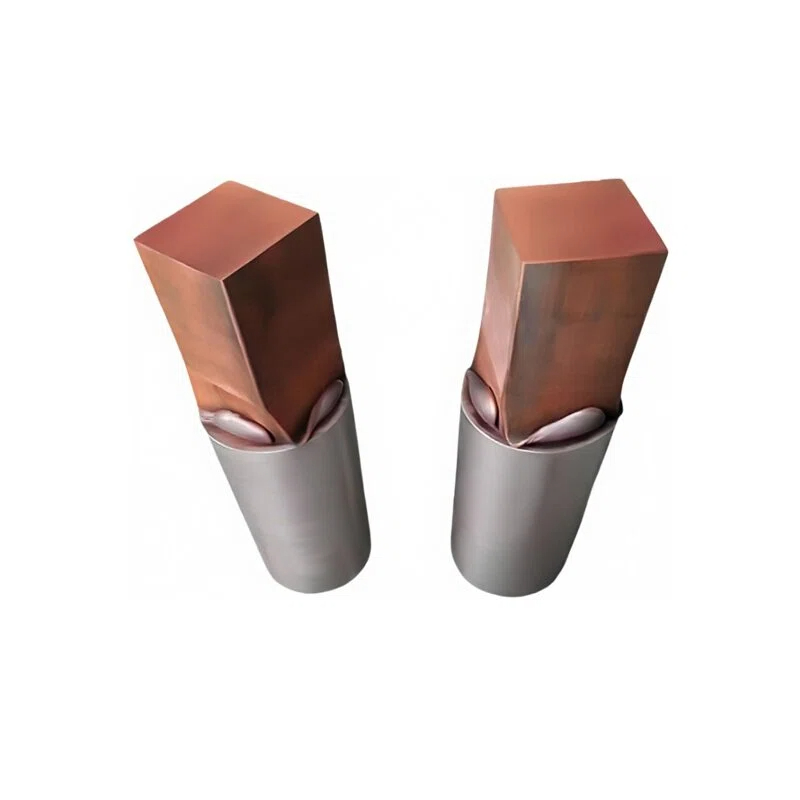
Non-ferrous metal plates exhibit unique advantages when combined with other metals due to their high melting point, high hardness, and excellent high-temperature resistance. However, optimizing interfacial bonding performance is crucial for improving the overall performance of the composite material. When plates are combined with metals such as copper and nickel, significant differences in their physicochemical properties can lead to poor wettability and limited element diffusion at the interface, resulting in insufficient interfacial bonding strength. To address this issue, surface modification techniques can enhance the interfacial compatibility between plates and the base metal. For example, electroless nickel plating can deposit a uniform nickel layer on the plate surface. Nickel, acting as an intermediate transition layer, effectively improves the wettability between the plates and copper, promotes element diffusion at the interface, and forms a metallurgical bond, significantly enhancing the interfacial bonding strength. Furthermore, magnetron sputtering nickel plating can also achieve dense deposition of a nickel layer on the plate surface, further optimizing the interfacial structure.
Metal matrix alloying is another effective way to improve interfacial bonding performance. By adding trace amounts of alloying elements, such as cobalt and iron, to the base metal, interfacial reaction behavior can be controlled, forming a compound layer conducive to interfacial bonding. During sintering, these alloying elements migrate to the interface between the plates and the matrix, undergoing solid solution reactions with the plates or forming stable intermetallic compounds, thereby enhancing interfacial bonding. Simultaneously, the addition of alloying elements improves the fluidity of the matrix metal, reduces the preparation temperature and time of the composite material, and decreases the formation of defects at the interface.
Optimizing the preparation process parameters is equally crucial for improving interfacial bonding performance. In the preparation of plate-based composites using powder metallurgy, the powder mixing process directly affects the uniformity of plate particle dispersion in the matrix. Using a wet mixing method combined with spray drying technology can achieve uniform mixing of plate particles and matrix powder, avoiding plate particle damage and agglomeration caused by friction in dry mixing. During the pressing process, combining cold pressing and hot pressing can improve the density of the green body and reduce shrinkage and crack formation during sintering. The selection of sintering temperature and time must comprehensively consider the interdiffusion behavior of the plates and the matrix metal to ensure the formation of an appropriate compound layer thickness at the interface, avoiding excessively thick or thin compound layers that adversely affect interfacial bonding performance.
Hot isostatic pressing (HIP) offers a novel solution for optimizing the interfacial bonding of plate-based composites. This technique achieves material densification through uniform gas pressurization under high temperature and pressure, while simultaneously promoting element diffusion and reaction at the interface. During HIP, a fine grain structure forms at the interface between the plates and the matrix metal, reducing interfacial defects and improving interfacial bonding strength. Furthermore, HIP can eliminate residual stress within the material, improving the overall mechanical properties of the composite.
Vacuum-phase deposition (VPD) provides an efficient method for surface modification of plate-based composites. Through chemical vapor deposition (CVD) or physical vapor deposition (PVD), a ceramic phase or metallic layer with specific functions, such as titanium carbide or aluminum nitride, can be deposited on the plate surface. These coatings not only improve the surface hardness and wear resistance of the plates but also act as a diffusion barrier layer, preventing excessive reaction between the plates and the matrix metal at high temperatures and protecting the stability of the interfacial structure. Simultaneously, the strong adhesion between the coating and the plate matrix contributes to improving the overall performance of the composite.
In-situ synthesis technology generates reinforcing phases in situ during the preparation of plate-based composites through chemical reactions, avoiding interfacial contamination and achieving a strong bond between the reinforcing phase and the matrix. For example, using self-propagating high-temperature synthesis technology, an exothermic reaction can be initiated in a mixture of plate powder and carbon powder to generate a carbonized plate reinforcing phase. During the reaction, the carbonized plate particles are uniformly distributed in the plate matrix, forming a good interfacial bond with the matrix, significantly improving the hardness and wear resistance of the composite material.
When plates are composited with other metals, a comprehensive approach is needed, including surface modification, matrix alloying, process optimization, hot isostatic pressing, vapor deposition, and in-situ synthesis, to comprehensively control the interfacial structure and properties and improve the overall performance of the composite material. The effective application of these methods provides strong support for the application of plate-based composites in fields requiring high temperature, high hardness, and high wear resistance.